What Is Cubic Zirconia? A Complete Guide to CZ Gemstones
If you have seen a beautiful sparkling stone described as cubic zirconia, or CZ, you may be wondering exactly what it is. Is cubic zirconia a diamond? Is it a fake diamond? Does it look cheap? And why can one cubic zirconia look much better than another?
Cubic zirconia is a man-made crystalline gemstone material made primarily from zirconium dioxide (ZrO2). It is best known as an affordable alternative to diamond, but high-quality cubic zirconia can also be an attractive gemstone in its own right.
One of the biggest misconceptions about CZ is that all cubic zirconia is essentially the same. The quality of the material matters, but so does something that can easily be overlooked: the way the gemstone has been cut and polished.
Is Cubic Zirconia a Real Gemstone?
Cubic zirconia is a real manufactured gemstone material, but it is not a diamond and should never be sold as one.
It is normally described as a diamond simulant because colourless CZ can be cut to create an appearance similar to a diamond.
This is very different from a laboratory-grown diamond. A lab-grown diamond is diamond produced under controlled conditions rather than mined from the earth. Cubic zirconia has a different chemical composition and crystal structure.
That difference is also one of the great attractions of CZ. It can provide a beautiful, clear and highly sparkling gemstone for a fraction of the price of a comparable diamond.
What Is Cubic Zirconia Made From?
Cubic zirconia is principally made from zirconium dioxide, with its cubic crystal structure stabilised during manufacture.
Although cubic zirconia can occur naturally in extremely unusual circumstances, the cubic zirconia used for jewellery is manufactured under controlled conditions.
The manufacturing process produces clear crystalline material which can then be cut and polished into finished gemstones.
Two gemstones produced from similar CZ material can therefore look surprisingly different if one has been cut and polished more accurately than the other.
Does Cubic Zirconia Look Like a Diamond?
A well-cut colourless cubic zirconia can have a remarkably diamond-like appearance, particularly to somebody viewing the stone without specialist gem-testing equipment.
However, CZ and diamond have different optical properties. Cubic zirconia can produce particularly noticeable flashes of coloured light known as fire, while diamond has its own characteristic combination of brilliance, scintillation and fire.
This means CZ does not need to be judged only by asking: "Does it fool somebody into thinking it is a diamond?"
A better question is: "Is it a beautiful, accurately cut gemstone?"
High-quality CZ can produce impressive brilliance and colourful flashes of light in its own right.
Is Cubic Zirconia Just a Cheap Fake Diamond?
The word fake can be misleading.
A cubic zirconia becomes deceptive only if somebody represents it as something it is not. A gemstone clearly sold as cubic zirconia is simply cubic zirconia.
CZ is an established jewellery material with its own properties, advantages and limitations.
Its affordability is actually one of those advantages. Instead of spending a large proportion of a jewellery budget on the gemstone material itself, CZ allows buyers to consider larger stones, unusual shapes and more elaborate designs at a much lower cost.
How Hard and Durable Is Cubic Zirconia?
Cubic zirconia has a hardness of approximately 8 to 8.5 on the Mohs hardness scale. That makes it a relatively hard gemstone material, although diamond is considerably harder at 10.
How Hard and Durable Is Cubic Zirconia?
Cubic zirconia is a hard and durable gemstone material, with a Mohs hardness of approximately 8 to 8.5. This makes it suitable for a wide variety of jewellery and places it among a number of well-known gemstones that can remain beautiful for many years when properly cared for.
Diamond takes hardness to another level. With a Mohs hardness of 10, diamond has exceptional resistance to scratching, which is one of the reasons both natural and laboratory-grown diamonds are so highly suited to jewellery intended for a lifetime of regular wear.
The difference does not mean that cubic zirconia is a soft or fragile gemstone. Rather, diamond is an exceptionally hard material against which almost any other gemstone will appear softer by comparison. CZ still offers very good hardness for jewellery, particularly when its affordability, brilliance and wide choice of cuts and sizes are taken into account.
It is also important to distinguish hardness from overall toughness. The Mohs scale measures resistance to scratching rather than resistance to every form of damage. Even a diamond can chip or fracture if struck in a vulnerable area, while any faceted gemstone can suffer damage around exposed edges, points or the girdle. Good jewellery design and sensible care therefore remain important whichever gemstone you choose.
Its relatively low replacement cost can also be an advantage. If a CZ stone eventually becomes badly worn after years of use, replacing the loose gemstone can be far less expensive than replacing a diamond.
Why Do Some Cubic Zirconia Stones Look Better Than Others?
This is one of the most important things to understand when buying loose cubic zirconia gemstones.
A gemstone does not sparkle simply because of the material from which it is made. Cut quality matters enormously.
The angles, proportions, symmetry, facet alignment and polish all influence how light enters and leaves a faceted gemstone.
A poorly proportioned gemstone can allow light to escape through areas where better cutting could return more light towards the viewer. This may create dull, dark or transparent-looking areas.
A carefully cut CZ can make far better use of the optical properties of cubic zirconia.
What Does 5A or 6A Cubic Zirconia Mean?
You may see cubic zirconia described using quality terms such as AAA, 5A, AAAAA or 6A cubic zirconia.
It is important to understand that these are commercial quality descriptions rather than a single internationally standardised gem grading system equivalent to the grading systems used for diamonds.
Different manufacturers and sellers may therefore use these terms differently.
When selecting CZ, an A-rating should not be the only consideration. Look at the actual gemstone's:
- Cut and proportions
- Symmetry
- Polish
- Colour
- Clarity
- Overall appearance and brilliance
at Diamondcz you can buy 5A loose cubic zirconia and 6A loose cubic zirconia in a wide choice of shapes and sizes.
What Is Hearts and Arrows Cubic Zirconia?
One particularly interesting example of precision gemstone cutting is the Hearts and Arrows pattern.
When a suitably designed and accurately cut gemstone is examined through a Hearts and Arrows viewer, symmetrical patterns can be visible when the gemstone is viewed from different directions.
The pattern is associated with careful symmetry and facet alignment.
Our selected Round Brilliant Hearts and Arrows cubic zirconia is cut to display this optical pattern.
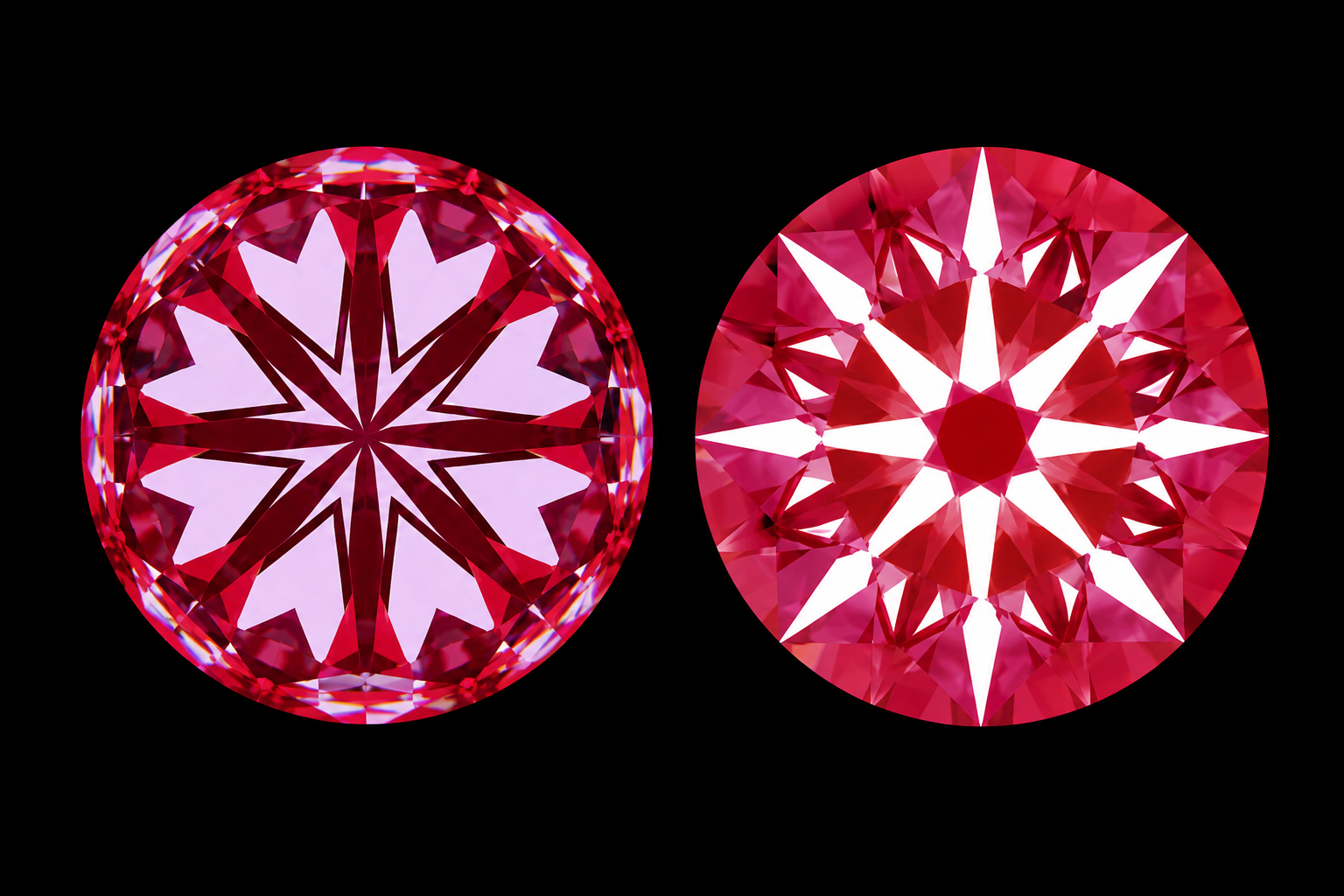
For somebody buying loose CZ for a ring, pendant, earrings or another jewellery project, looking at the quality of the cut can therefore be just as important as choosing the size of the stone.
Cubic Zirconia vs Diamond: What Is the Difference?
| Property | Cubic Zirconia | Diamond |
|---|---|---|
| Composition | Zirconium dioxide | Carbon |
| Origin | Manufactured for jewellery | Natural or laboratory-grown |
| Mohs hardness | Approximately 8–8.5 | 10 |
| Clarity | Very high clarity readily available | Varies significantly |
| Fire | Strong coloured flashes | Strong but optically different |
| Price | Very affordable | Generally much more expensive |
| Available shapes | Very wide choice | Very wide choice |
The better choice depends upon what matters to the buyer.
If rarity, maximum scratch resistance or specifically owning a diamond is important, CZ does not provide those characteristics.
If the priority is appearance, sparkle, choice of size, choice of cut and value for money, high-quality cubic zirconia can be an excellent option.
Does Cubic Zirconia Go Cloudy?
You may have heard the claim that cubic zirconia inevitably becomes cloudy. This is an oversimplification.
What appears to be cloudiness can often simply be a build-up of skin oils, soap, cosmetics and other residue on the surface of the gemstone.
Careful cleaning may restore much of the original appearance when surface contamination is responsible.
However, CZ is not indestructible. Because it is softer than diamond, scratches and surface wear can accumulate over time.
Regular cleaning and careful handling will help keep a cubic zirconia gemstone looking its best.
Is Expensive Cubic Zirconia Worth Buying?
Cubic zirconia crystal material is inexpensive compared with diamond, so a high price does not automatically mean that a stone is much better.
However, that does not mean every CZ gemstone should cost exactly the same. There are costs associated with producing better material and accurately cutting, polishing and inspecting finished gemstones.
When comparing loose CZ gemstones, consider: material quality, cut quality, polish, shape, size and overall appearance rather than assuming that the cheapest and most expensive stones are identical.
What Cuts and Shapes Are Available in Cubic Zirconia?
One of the biggest advantages of buying loose cubic zirconia is the enormous choice of gemstone cuts available.
Popular cuts include:
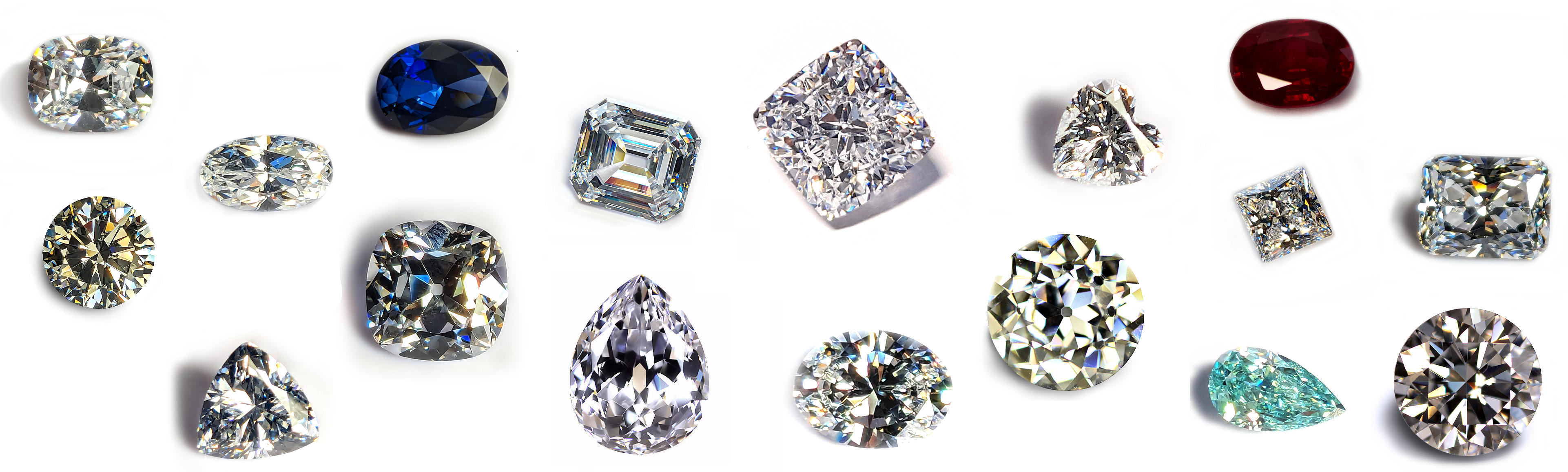
Different cuts can give exactly the same gemstone material a dramatically different appearance.
How to Choose a Loose Cubic Zirconia Gemstone
Choose the Shape
Consider whether the jewellery requires a round, cushion, oval, pear, princess, emerald cut or another shape.
Check the Millimetre Size
If you are replacing a gemstone or fitting a stone into an existing jewellery setting, the millimetre dimensions are particularly important.
Carat weight alone does not tell you whether a gemstone will fit an existing setting.
Consider the Cut Quality
Look for attractive symmetry, good polish and effective light return. For precision-cut gemstones, the quality of the faceting can make a major difference to the finished appearance.
Choose the Colour
Colourless CZ provides the familiar diamond-like appearance, but cubic zirconia can also be manufactured in many different colours.
Consider How the Jewellery Will Be Worn
Rings normally experience more knocks and abrasion than earrings or pendants, so consider how frequently the jewellery will be worn and where the gemstone will be set.
Is Cubic Zirconia Worth Buying?
For many applications, yes.
CZ does not have the rarity of natural diamond and it does not have diamond's exceptional hardness. Those are genuine differences and should not be hidden.
But those differences do not make cubic zirconia a poor gemstone.
A carefully cut cubic zirconia can be bright, extremely clear, colourful and visually impressive while costing dramatically less than a comparable-sized diamond.
This makes CZ particularly attractive for:
- Jewellery makers
- Replacement gemstones
- Engagement and dress rings
- Earrings and pendants
- Jewellery design experiments
- Travel jewellery
- Large or unusual gemstone cuts
- Anyone who simply prefers not to spend diamond prices
The important thing is to understand what you are buying.
Instead of dismissing cubic zirconia because of myths surrounding "fake diamonds", judge the gemstone on its cut, appearance, quality and suitability for the jewellery in which it will be used.
Buy Loose Cubic Zirconia Gemstones
At DiamondCZ we stock loose cubic zirconia in a large range of shapes and sizes, including selected 5A and 6A quality stones and Hearts and Arrows cuts.
Choose a gemstone cut below to see the currently available sizes:
Cubic Zirconia Frequently Asked Questions
Is cubic zirconia a diamond?
No. Cubic zirconia and diamond are different materials. CZ is principally zirconium dioxide, while diamond consists of carbon.
What does CZ stand for?
CZ is the commonly used abbreviation for cubic zirconia.
Is cubic zirconia a natural stone?
The cubic form of zirconium oxide can occur naturally, but cubic zirconia gemstones used in jewellery are manufactured.
Is cubic zirconia the same as zircon?
No. Zircon and cubic zirconia are completely different gemstone materials. Zircon is a naturally occurring mineral, while the cubic zirconia normally used for jewellery is manufactured zirconium dioxide.
Can cubic zirconia scratch?
Yes. CZ is relatively hard, but it is not as resistant to scratching as diamond. Surface wear can therefore develop over time.
Can cubic zirconia be used in an engagement ring?
Yes. Cubic zirconia can be used in engagement rings. Someone choosing CZ for a ring worn every day should simply understand that it may show wear sooner than diamond and could eventually need replacing.
Why is cubic zirconia cheaper than diamond?
Cubic zirconia can be manufactured relatively inexpensively and is not valued for natural rarity in the same way as natural diamond. Its lower price does not mean that it cannot be an attractive gemstone.
Is 6A cubic zirconia better than 5A?
5A and 6A are commercial quality descriptions rather than universally standardised gemmological grades. Buyers should therefore also consider the actual gemstone's cut, polish, clarity, colour and appearance.